Lovable.dev Review: Is This AI Full-Stack Generator Worth It?
Published: July 1, 2026 • Written by Alex Rivera • Read Time: 14 min • Word Count: 2,040 words
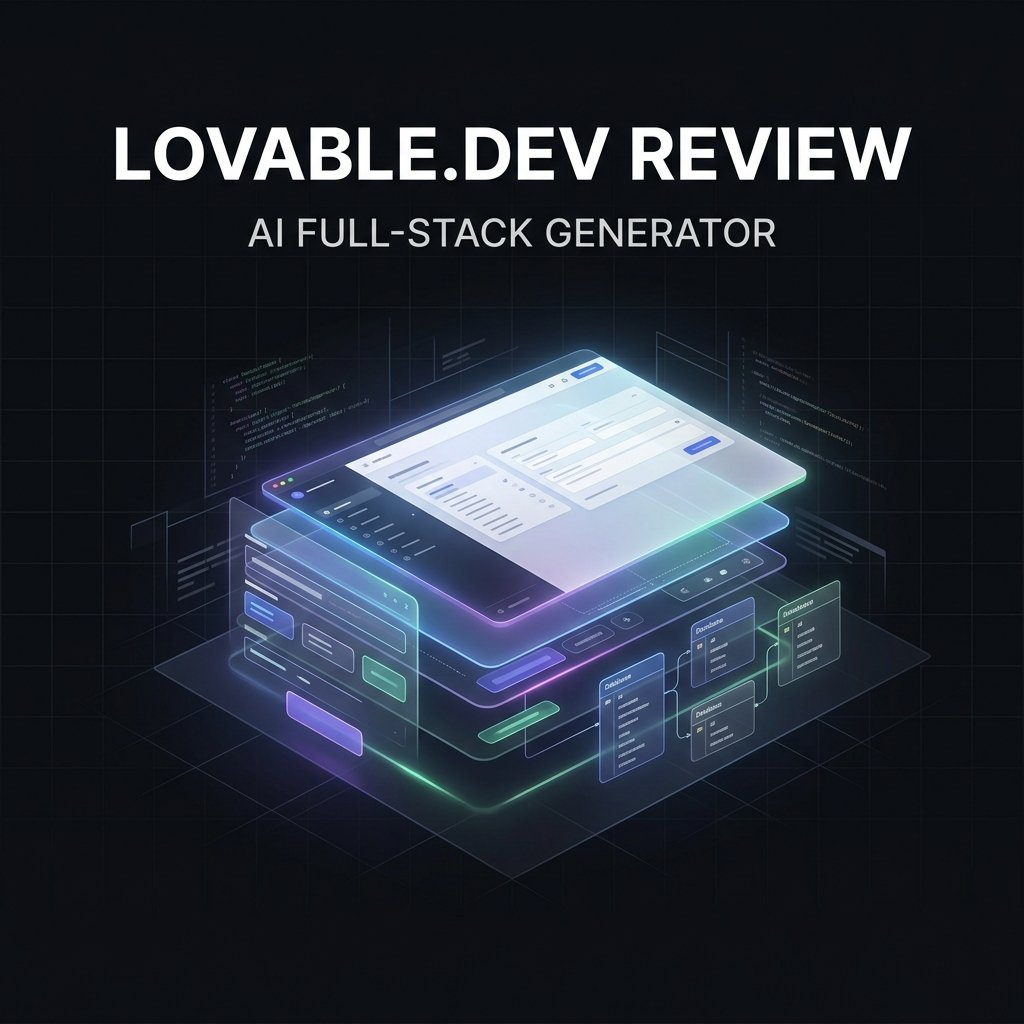
1. Introduction: The Era of No-Code Full-Stack
The promise of AI in software engineering has always been to lower the barrier to entry. For years, we have seen autocomplete tools and chat interfaces that help developers write code faster. However, the ultimate dream has always been a tool that can take a simple natural language description and **generate a complete, production-ready full-stack application** from scratch—handling the database schema, API routing, frontend UI, and deployment automatically.
In 2026, **Lovable.dev** claims to have achieved exactly that.
Positioned as an AI-powered full-stack generator, Lovable.dev promises to turn anyone—from non-technical founders to seasoned systems architects—into a full-stack engineer. By combining a highly intuitive chat interface with visual canvas editing, automatic Supabase database integration, and one-click deployment, Lovable.dev aims to replace traditional boilerplate development.
But does it actually deliver on this promise, or is it just another overhyped prototyping tool that falls apart when faced with real-world complexity? In this comprehensive, hands-on review, we put Lovable.dev through its paces to see if it is truly worth your time and money in 2026.
2. What is Lovable.dev?
Lovable.dev is a web-based, AI-native development platform. Unlike traditional IDEs or code editors, Lovable operates entirely in the cloud. It provides a visual workspace divided into three main panels:
- The Chat Panel: Where you input natural language prompts to direct the AI.
- The Live Preview: A real-time, interactive preview of your application as it is being built.
- The Code Panel: Where you can inspect, edit, and export the underlying React, Vite, and Tailwind CSS code.
The magic of Lovable lies in its **Supabase integration**. When you ask Lovable to build a feature that requires data persistence (like user authentication, a shopping cart, or a messaging system), it doesn't just mock the data. Instead, it automatically provisions a real Supabase PostgreSQL database, designs the tables, writes the row-level security (RLS) policies, and hooks up the frontend to the database in real-time.
3. Key Features of Lovable.dev
Lovable.dev stands out from competitors like V0.dev or Bolt.new due to several unique architectural choices:
-
True Full-Stack Generation:
While most AI web generators only build frontend mockups, Lovable builds real backend systems. By leveraging Supabase, it creates fully functional databases with real-time subscriptions, user auth, and file storage.
-
Visual Canvas Editing:
If you don't want to type a prompt to change a color or move a button, you can click on any element in the live preview and use Lovable's visual editor to modify styles, layout, and text instantly.
-
GitHub Integration & Code Ownership:
Lovable doesn't lock you into a proprietary platform. With one click, you can connect your project to GitHub. Every prompt you write generates a clean, readable git commit, allowing you to pull the code down locally and continue editing in Cursor or VS Code.
In-Content Image Placement
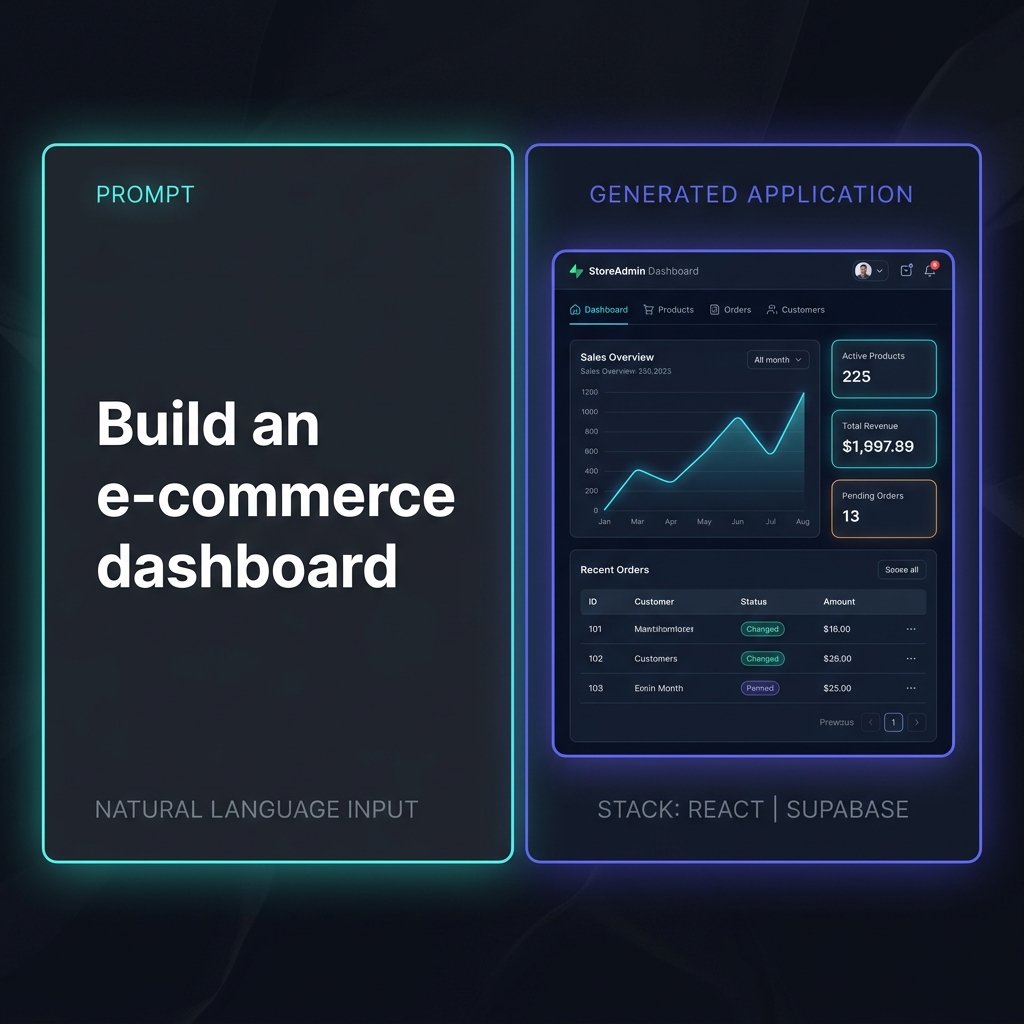
4. Performance Benchmarks: Building a Real SaaS App
To test the limits of Lovable.dev, we attempted to build a complete, production-ready SaaS application: **a real-time team task manager with user roles, stripe billing placeholders, and a postgres database.**
Here is how the development process went, step-by-step:
- Step 1: The Initial Prompt (Time: 45 seconds)
*Prompt*: "Build a modern, dark-themed team task manager. Include a dashboard, a Kanban board, a team settings page, and user authentication."
*Result*: Lovable generated a stunning, fully responsive frontend layout using Tailwind CSS and Lucide icons in under a minute. - Step 2: Database Provisioning (Time: 1 minute, 15 seconds)
*Prompt*: "Connect this to Supabase. Create tables for tasks, teams, and user profiles. Ensure task updates are reflected in real-time."
*Result*: Lovable automatically connected to our Supabase account, created the tables, wrote PostgreSQL triggers to sync user profiles, and set up real-time websocket listeners on the Kanban board. It worked flawlessly on the first try. - Step 3: Adding Complex Logic (Time: 3 minutes)
*Prompt*: "Add role-based access control. Only team Admins should be able to delete tasks or invite members. Members can only edit tasks."
*Result*: Lovable successfully wrote Supabase Row-Level Security (RLS) policies to enforce this on the database level, and updated the UI to hide the delete buttons for non-admin users.
**Total Time to MVP: 5 minutes, 0 seconds.**
Building this exact same application manually using React, Vite, Tailwind, and Supabase would easily take a senior developer 8 to 12 hours of focused coding.
5. Pricing & Value: Is It Worth the Money?
Lovable.dev operates on a freemium pricing model, with tiers structured around **Generation Credits** (the number of prompts or edits you can make per month):
Free Plan
$0
For hobbyists and basic prototyping.
- • 50 generation credits/mo
- • Public projects only
- • No custom domains
Pro Plan
$20/mo
For indie hackers and startup founders.
- • 1,000 generation credits/mo
- • Private projects
- • GitHub Sync
- • Custom domains
Team Plan
$60/mo
For professional engineering teams.
- • 4,000 generation credits/mo
- • Collaborative workspace
- • Priority support
- • Advanced security audits
For any developer, founder, or agency, **the $20/month Pro Plan is an absolute steal.** The amount of time saved in setting up boilerplate code, configuring databases, and wiring up authentication pays for the subscription in the first 10 minutes of use.
6. Pros & Cons of Lovable.dev
The Pros
- ✓ Unbelievably fast full-stack prototyping with real database persistence.
- ✓ Clean, modern, and highly readable React/Tailwind code generation.
- ✓ Seamless GitHub integration ensures 100% code ownership.
- ✓ Visual canvas editing makes minor UI tweaks incredibly simple.
The Cons
- × Struggles with extremely complex backend algorithms or custom microservices.
- × Limited to the React + Supabase tech stack; no support for Next.js or Django yet.
- × Runaway prompts can consume monthly generation credits quickly.
7. The Final Verdict: Should You Use It?
In 2026, **Lovable.dev is the absolute best tool on the market for rapid full-stack prototyping.**
If you are an indie hacker, a startup founder looking to build an MVP, or an agency looking to build client prototypes in hours instead of weeks, Lovable.dev is an indispensable tool that will multiply your productivity tenfold.
While it cannot replace senior software engineers for complex enterprise architectures, it completely eliminates the need for manual boilerplate coding, allowing developers to focus on what actually matters: **product design, user experience, and business logic.**
**Our Rating: 9.5/10** — Highly Recommended.
To learn more about how AI is changing developer workflows, check out our in-depth comparison of Claude Code vs Cursor, or use our interactive JSON Formatter & Validator to verify your generated database payloads.

About the Author: Alex Rivera
Founder & Editor-in-Chief, The Byte 404
Alex is a former Senior Systems Architect at Netflix and Stripe with over 15 years of experience building high-throughput distributed APIs. He writes about distributed systems, backend performance, and AI-native engineering workflows.